Spring repair
Torsion and extension springs offset door weight. A broken or poorly matched spring affects the entire system.
Garage door spring repair in ScottsdaleA stuck garage door can disrupt your day and leave your home open.
Call and describe the symptom; a local technician will find the cause and make the repair safely.
Residential garage doors depend on balanced springs, guided rollers and tracks, lift cables, hinges, panels, an opener, and safety controls.
These service categories help you describe the problem and understand what a technician should evaluate.
Torsion and extension springs offset door weight. A broken or poorly matched spring affects the entire system.
Garage door spring repair in ScottsdaleMotor, belt or chain drive, logic board, wall control, remotes, keypad, and backup functions need distinct checks.
Garage door opener repair in ScottsdaleFrayed or displaced lift cables can leave a door crooked or unstable. They carry load and require professional attention.
Garage door off track repair in ScottsdaleBinding, scraping, and uneven movement may involve rollers, hinges, track alignment, or an underlying balance issue.
Garage door track repair in ScottsdaleSensors & remotes
Closing reversal, unresponsive controls, and lost access devices each need different troubleshooting.
Garage door opener repair in ScottsdalePanels & replacement
A dented panel may be replaceable, while structural damage or obsolete parts can favor a new door.
Replace garage door in Scottsdale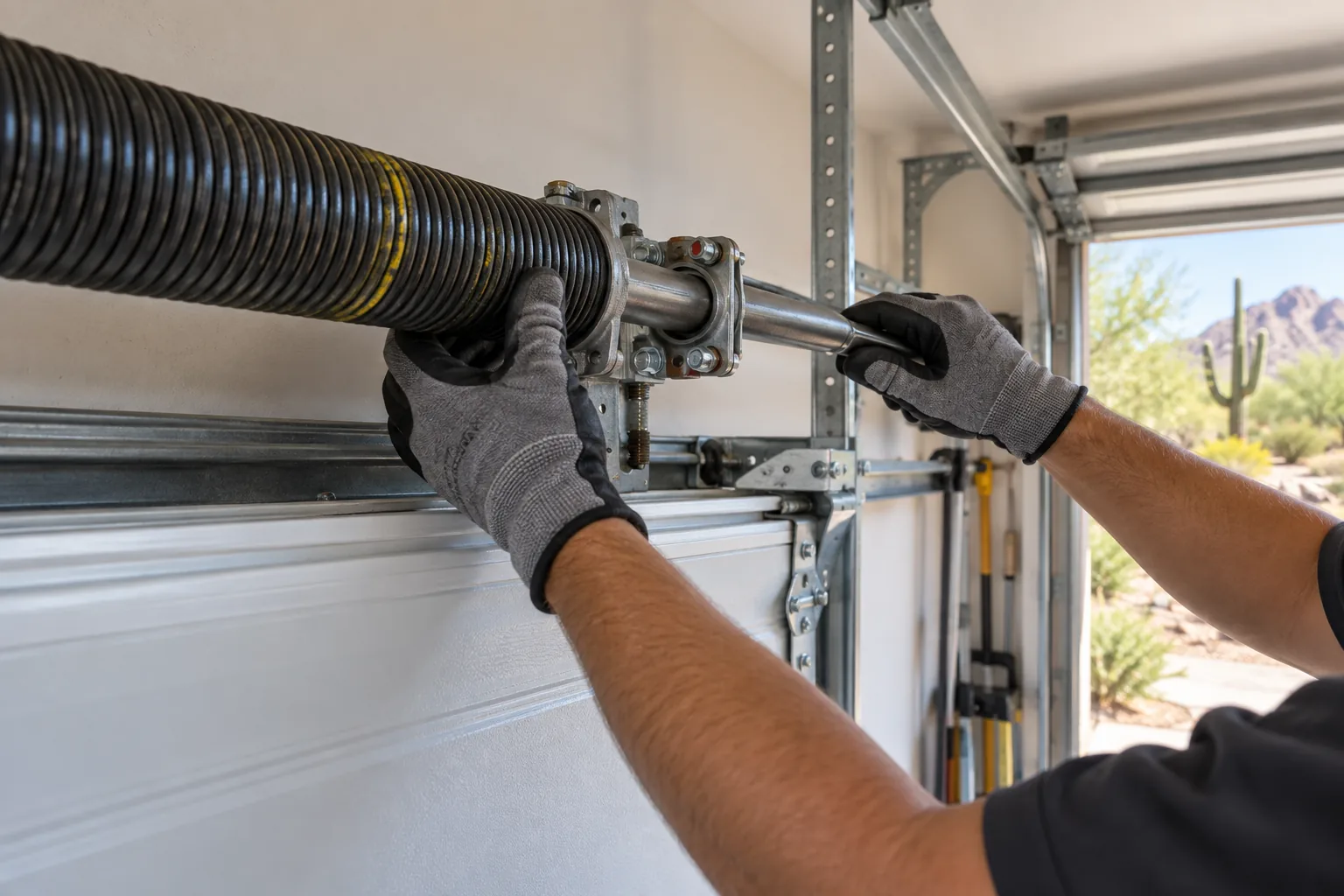
The dedicated page is garage door spring repair in Scottsdale.
A garage door spring is a counterbalance device, not a small accessory. When it fails, the opener may still hum or pull, but the door can be too heavy to move safely.
Torsion springs are typically mounted over the door opening; extension springs run alongside the upper tracks. The correct replacement depends on the door's weight, size, hardware configuration, and the spring design.
Warning signs include a visible gap in the coil, a sudden loud bang, the door rising only a few inches, or a door that feels dramatically heavier than before.
These are clues, not a remote diagnosis. A professional should also inspect cables, drums, bearings, and the opener for damage caused by the failure.
Some doors use two springs. Whether to replace one or both should be discussed after checking age, cycle rating, condition, and matching requirements.
Ask what parts are included, whether the door will be balanced and safety-tested afterward, and what written warranty applies to parts and labor.
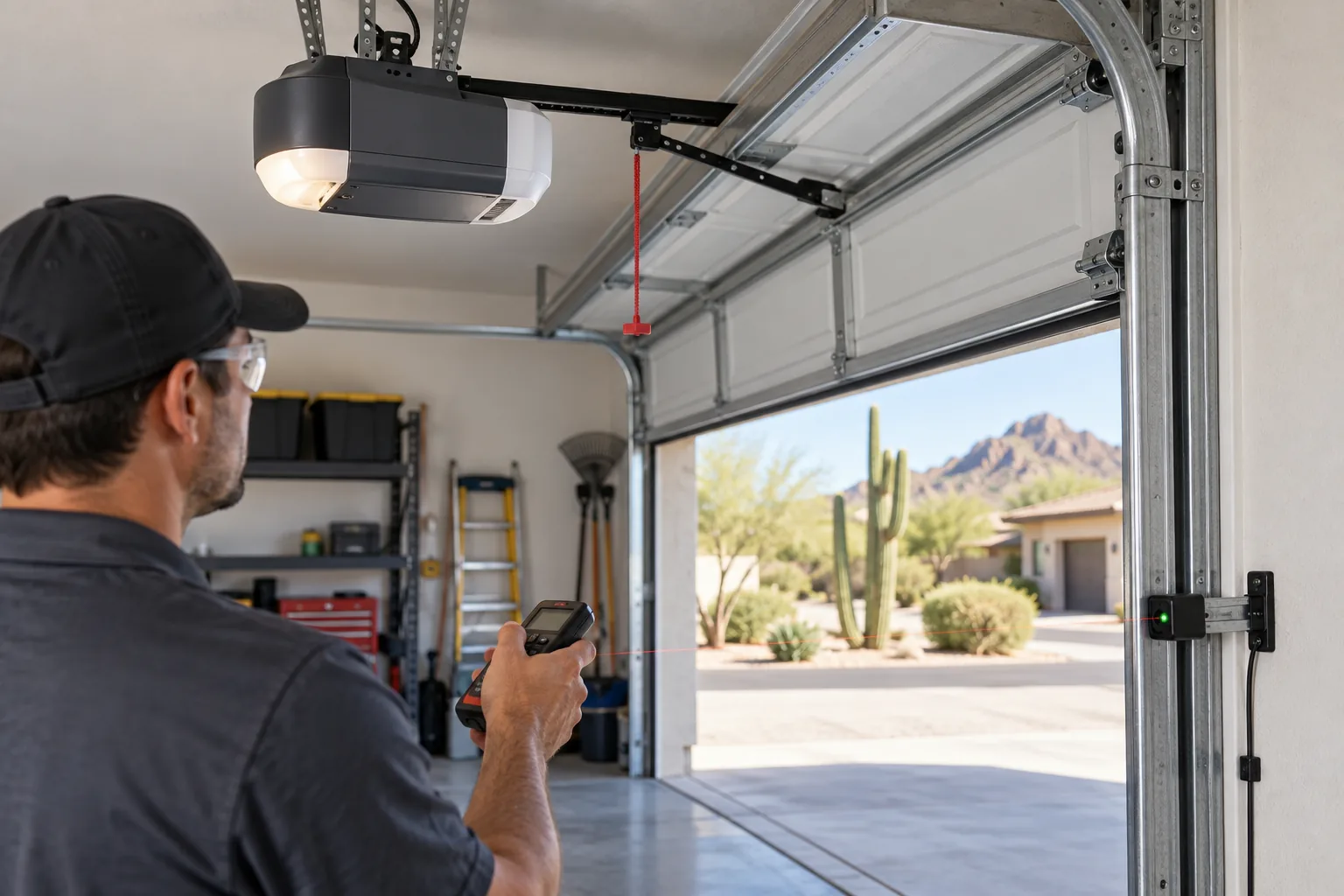
The dedicated page is garage door opener repair in Scottsdale.
If a wall button works but a remote does not, the remote battery, programming, lock setting, or signal path deserves attention.
If the motor runs but the door stays still, a disengaged trolley or drive component could be involved.
If the opener strains or stops shortly after starting, the door itself may be heavy or binding. Replacing the motor before checking balance can leave the real fault untouched.
Photo-eye sensors at the lower opening help prevent a closing door from contacting an obstruction. Dust, objects, misalignment, damaged wiring, or failed hardware can cause a door to reverse or refuse to close.
A model's blinking-light pattern varies, so the manufacturer's manual is more useful than a universal online code list. A technician should verify the photo-eyes and the opener's reversal behavior after service.
Opener repair versus replacement depends on age, parts availability, drive condition, safety features, desired noise level, and the installed door.
Belt-drive, chain-drive, wall-mount, and smart-connected options solve different needs; no single model is best for every garage. For an attached garage, noise may matter.
For a household that needs access during a power outage, ask about a compatible battery-backup option. For shared access, ask about keypad and remote programming and how lost controls are removed from memory.
Before approving a new opener, request a written scope that says whether controls, photo-eyes, programming, removal of the old unit, and safety testing are included. Confirm the product and labor warranties separately.
A crooked door has its own page: garage door off track repair in Scottsdale.
A smooth door needs the lift system and guide path to work together.
A visible problem in one part can be the result of strain somewhere else, so diagnosis should include the whole moving assembly.
Lift cables connect the door to the spring system. A cable can fray, break, or come off its drum. The door may lean, hang unevenly, or jam in the opening.
Do not pull a loose cable or attempt to rewind it; the door can shift unexpectedly. A service visit should look for the reason the cable moved, not merely put it back in place.
Spring balance, drum condition, roller travel, and an obstruction can all be relevant.
A roller out of its track, a bent rail, or a loose hinge can make the door shake, scrape, or stop. Door weight and balance matter here too.
If a track is bent or pulling from its mounts, pushing the door back into line can worsen the bend or allow a section to fall.
A technician should inspect the vertical and horizontal tracks, roller condition, attachment points, panel alignment, and the door's balance before selecting repair or replacement parts.
Panels, hinges, and seals
One dented section can sometimes be replaced while the rest of the door stays.
Feasibility depends on the manufacturer, age, model, dimensions, finish, and whether matching panels are still available. A replacement panel may be structurally correct without being an invisible color match.
Hinges and brackets keep the sections articulated. Cracks, loose fasteners, or metal fatigue deserve prompt attention, especially if the door twists in motion.
Bottom seals and perimeter weatherstripping can reduce drafts, dust, insects, and minor water entry. They cannot correct a sloped driveway, standing water, or a door that is not level.
The right fix depends on whether the gap is in the seal, threshold, floor, or door alignment.
Noise is a clue, not a diagnosis
Squealing rollers, rattling panels, grinding from an opener, and a sharp spring pop sound different, but sound alone cannot establish which part should be replaced.
Describe when the noise happens, whether it is new, and whether the door's movement changed. Avoid spraying or adjusting components indiscriminately.
A maintenance visit should include an inspection and an explanation of what was found before work begins.
An open garage can create a security concern. A shut garage can trap a vehicle.
A door suspended halfway may be unstable. Your next move depends on the position and visible condition of the door.
If the door is crooked, a cable is loose, a spring is broken, or a panel is collapsing, keep people away and stop operating the opener.
Do not stand under the door, pull the emergency release while the door is unstable, or try to force it shut. Secure the home through another entrance when possible.
If a vehicle is trapped, treat access as a scheduling priority but do not turn a mechanical fault into an injury risk.
When you call us, say whether the door is open or closed, whether the garage is attached, whether another entrance exists, and whether people or vehicles are blocked.
Ask about the actual response window, after-hours availability, call-out charge, and what the visit can accomplish if a part must be ordered.
"Emergency service" and "same-day service" are different promises; confirm what is available at the moment you call.
For a simple power outage with no visible door damage, the owner's manual may explain the manual-release procedure.
Do not use it if the door is crooked, suddenly very heavy, or otherwise suspect. When in doubt, a professional inspection is the safer choice.
Call NowSix details that speed up triage
Photos can help describe damage, but a firm repair plan usually requires an on-site inspection.
Scottsdale homes range from older South Scottsdale garages to newer attached garages and large custom openings farther north. The door's dimensions, construction, insulation, finish, and opener arrangement can be very different.
Desert heat and direct sun can make the garage environment demanding for seals, finishes, electronics, and stored items. Dust may collect near photo-eye lenses and moving surfaces.
This does not mean every summer failure is caused by heat or dust.
It does mean an inspection should consider the door's exposure, the location of the opener, the condition of seals, and whether a symptom appears only during particular times of day.
A shaded north-facing door and a west-facing door in full afternoon sun may have different wear patterns.
For replacement, appearance matters along with function. A flush steel panel, wood-look finish, full-view aluminum design, or traditional raised panel can change the exterior character of a home.
Ask about finish options, insulation construction, glass privacy, maintenance, wind requirements applicable to the product, and the weight the spring system must support.
If your property is subject to an HOA or design review, confirm its current rules before placing an order. We do not assume that every Scottsdale address has the same approval process.
Our service area lists only the places we really serve. Nearby cities appear on our site only when we genuinely serve them.
These are geographic reference points for planning a service request, not a claim that a named company serves every address listed.
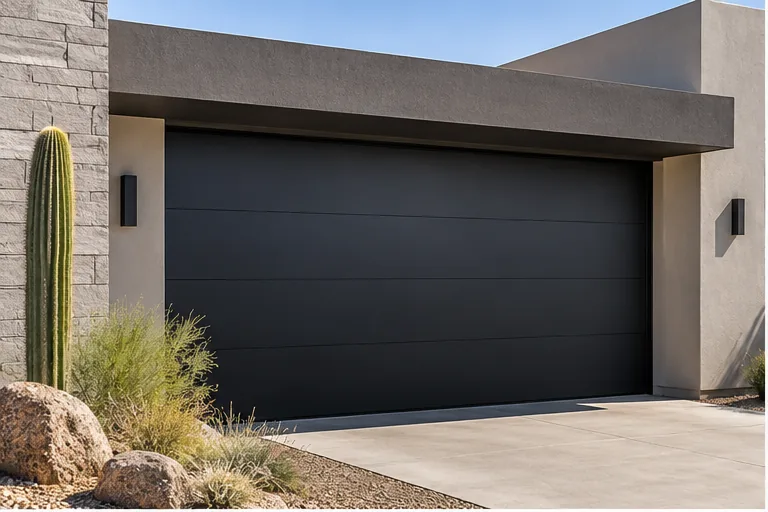
Quiet, architectural lines.
A dark flush-panel door can give a stucco or contemporary exterior a simple, uninterrupted plane. Compare the finish in direct sun and shade, and ask how panel construction, insulation, and hardware affect weight.
Call NowFlush panel
Minimal profile for a contemporary facade.
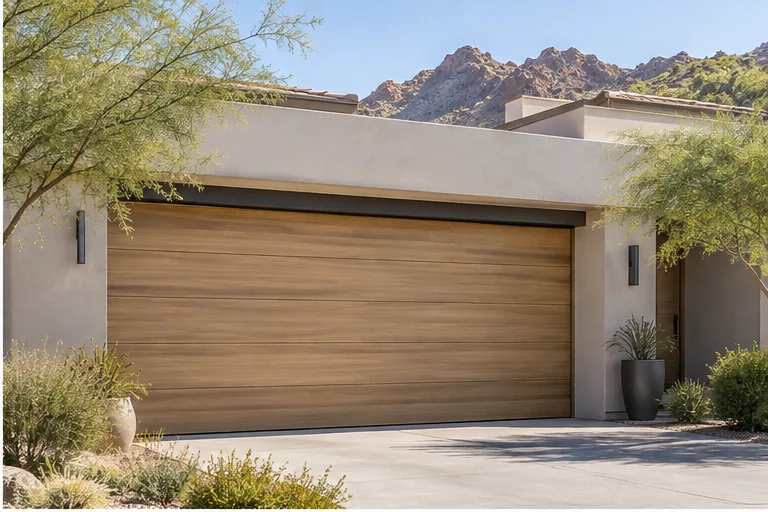
Wood look
Warm texture with material and finish choices to compare.
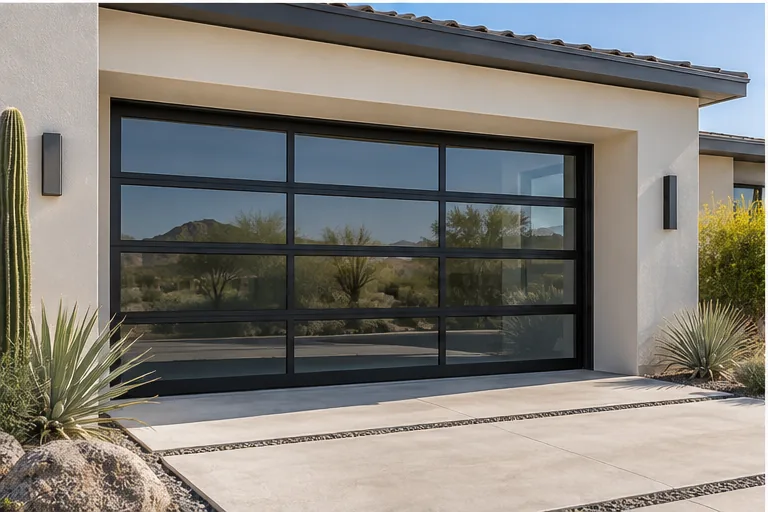
Full view
Light and transparency balanced against privacy and heat.
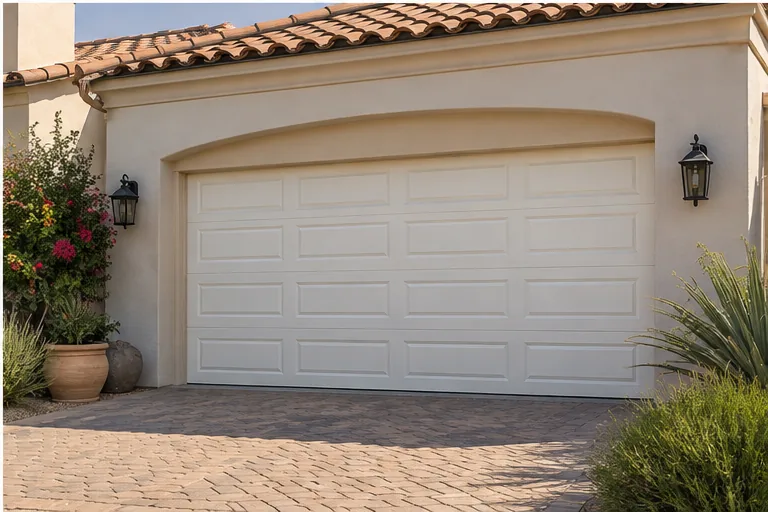
Classic panel
Familiar detail that can suit many residential styles.
Ordering a new door is covered on replace garage door in Scottsdale.
A complete replacement is a design and function choice as well as a repair choice.
Repair often makes sense when the door sections are structurally sound, the fault is limited to replaceable hardware, the right parts are available, and the repaired system can be balanced and tested safely.
A spring, cable, roller, sensor, remote, or opener fault does not automatically justify a new door. A single damaged panel may also be replaceable if the model and finish are available.
Replacement may deserve consideration when multiple panels are damaged, the door has recurring structural problems, repair parts are obsolete, a finish match is unacceptable, or the household wants a different appearance, insulation level, or window arrangement.
A new door still needs properly sized springs, compatible tracks, suitable opener capacity, and careful installation. The exterior look is only one part of the specification.
| Decision factor | Repair path | Replacement path |
|---|---|---|
| Door structure | Sections and frame remain sound. | Multiple sections are damaged or no longer align. |
| Parts | Compatible components are available. | Key panels or hardware cannot be matched. |
| Home goals | Existing look and performance still meet needs. | Appearance, insulation, light, or access needs changed. |
| Timing | Available parts may allow a shorter repair path. | Door selection and ordering can add lead time. |
| Scope | The visit covers the failed part and a balance check. | The written scope names the door, tracks, hardware, labor, and removal. |
Watch and listen. Leave high-tension adjustments to trained professionals.
Look at the door during a normal cycle from a safe location. Note new hesitation, uneven movement, a gap under the door, rubbing at one side, or a change in sound.
Observe the cables and springs without touching them. If you see fraying, separation, rusted hardware, loose hinges, or a crooked section, stop using the door and arrange an inspection.
Keep the opening clear and the photo-eye lenses unobstructed. If a sensor light changes, consult the opener's manual before assuming a failed component.
Test the opener's safety features at the interval and by the method specified by its manufacturer.
The Door & Access Systems Manufacturers Association recommends regular inspection and testing; a service technician can explain the tests for your particular system.
A maintenance visit should have a defined checklist, not an unexplained "tune-up" label. Keep a record of the visit and any recommendations.
Maintenance can reduce neglected wear, but it cannot guarantee that a spring or electronic part will never fail.
In a hot or dusty garage, check whether seals have hardened or pulled away and whether dust is collecting around the sensor area.
Keep the opener and door manufacturer's instructions. If the door is unusually heavy, runs crooked, or needs manual force, do not make continued operation your test method.
Getting help
Power, the opener drive, a disconnected trolley, a broken spring, damaged cable, or a door binding in the track can all produce a door that will not open.
Observe whether the motor runs and whether the door moved at all, but do not keep cycling an opener against a heavy or crooked door.
A technician should separate an electrical failure from a counterbalance or track problem.
First check from a safe distance for an object in the opening. Photo-eye sensors, wiring, opener settings, or resistance in the door's travel may also be involved.
If the door starts down and reverses, do not bypass the sensors or hold a control to force it shut.
Record what the indicator lights do and consult the model manual or a qualified repair company.
Often, but its position makes safety the first concern. A stuck door may have an off-track roller, damaged cable, broken spring, bent panel, or opener issue.
Keep people clear of the opening and do not try to pull it into position. Describe the exact position and any visible damage when requesting service so the visit can be prioritized appropriately.
A door stuck open, hanging unevenly, blocking the only practical exit, or exposing the home may need urgent attention. "Emergency" describes your situation, but a company's after-hours and same-day availability must be confirmed directly.
Ask when someone can attend, what the call-out charge is, and whether the visit can secure the opening if a special-order part is needed.
Give the address or ZIP code, door position, approximate size, visible damage, when the symptom began, and what the opener does. Mention a loud bang, loose cable, crooked section, or blocked access.
A loud bang, a visible gap in a torsion spring above the opening, or a door that suddenly feels very heavy are common signs.
The opener may lift only a few inches or strain without moving the door. Stop operating it and arrange an inspection.
Do not touch the spring to test it; other parts can fail at the same time.
Operating a door with a suspected broken spring can overload the opener or allow the door to move unpredictably. Avoid using it until the system is assessed.
Some doors are much heavier than they appear, and the safe approach depends on their size, condition, and access. Do not try to lift or release an unstable door on your own.
Torsion springs generally sit on a shaft above the garage opening and work by twisting.
Extension springs run along the upper horizontal tracks and stretch as the door moves. Both counterbalance door weight, and both require proper matching and safe installation.
It depends on the system and the condition of the surviving spring.
On a two-spring door, matching age and cycle rating can be relevant, and replacing both at one visit may avoid another near-term service call.
It is still a choice to discuss after inspection, not a universal rule. Ask for the reasoning, itemized options, and warranty for each proposal.
Yes. Lift cables help carry the door's load. A frayed, broken, or displaced cable can leave the door crooked or unstable.
Stop using the door, keep clear of the cable and bottom bracket, and request professional assessment.
The inspection should identify why the cable moved or wore out as well as whether related parts need repair.
The opener may be disconnected from the door, a drive part may have failed, or the door itself may be jammed. A suddenly heavy door can also indicate spring trouble.
Do not assume a new opener is needed from the sound alone. Our technician tests the door's mechanical condition before replacing a motor assembly.
An obstruction, dirty or misaligned photo-eye, wiring fault, incorrect travel setting, or mechanical resistance can trigger reversal. Make a visual check for objects and obvious sensor blockage without placing yourself under a moving door.
Never disable the safety system to make it close. The opener's manual may help interpret the lights; a technician can test the whole closing cycle.
A weak remote battery, lost programming, a lock mode on the wall control, signal interference, or a failed remote can explain the difference.
Check the manufacturer's instructions for the model and whether other remotes work. If a remote was lost or stolen, ask how to clear stored access codes and reprogram the devices you still have.
It may reduce motor or drive noise, especially if a quieter drive type fits the garage, but it will not fix worn rollers, loose hinges, rubbing tracks, or a poorly balanced door.
Have the whole moving system checked. In an attached garage, the door's construction and vibration transfer can matter as much as the opener.
New doors and upkeep
The on-site work varies with door size, opening condition, track changes, opener compatibility, and whether the old door must be removed.
Ordering a chosen model or finish can take longer than installation itself. Ask for separate order and installation timelines, who handles disposal, and what must be ready at the property.
Insulated construction can affect garage temperature, sound, and panel stiffness, but the result depends on the complete door, seals, sun exposure, and whether the garage is conditioned or attached.
It will not turn an unconditioned garage into a cooled room. Compare actual door construction and use needs rather than choosing only by a headline insulation number.
Possibly. Compatibility depends on the new door's weight and movement, rail and mounting arrangement, opener capacity, condition, and safety features. Our technician evaluates the existing opener during measurement.
Make a regular visual and sound check part of home maintenance, and follow the door and opener manufacturers' schedules for safety testing and service.
Look for new uneven movement, visible wear, damaged seals, loose hardware, or changes in sensor behavior. Do not adjust springs or cables during a homeowner check.
Arrange professional attention when the door becomes heavy, crooked, or unreliable.
Some Scottsdale properties have association design rules, while others do not. Check your own community documents before ordering a change in color, windows, material, or panel style.
A product's availability does not establish that it is approved for your address. If local permits or other requirements apply, confirm them for the specific project rather than relying on a generic citywide answer.
What customers mention.
Feedback on repair visits, communication and follow-up.
Clear explanations.
Considered next steps.
Share your feedback.
Tell the team about your service experience.
Know who will carry out the work.
Confirm the operator’s name, licensing, insurance and service scope before booking.
A clear plan for your door.
Know the findings, the scope and what happens next.
Describe what the door does before any part is named.
What is included
Discuss the work, parts and access before agreeing to the repair.
Safe handling
Springs and cables stay with the technician, not with you.
Follow-up details
Keep the service record and know how to raise a new concern.
Talk through the door problem.
Call to describe what the door is doing. A local garage door technician will explain the next step and arrange a visit.
Call NowDescribe what the door is doing
Leave your name, phone number and ZIP code and say what the door is doing. A technician calls you back to set the visit.
If the door is hanging crooked, a cable is loose or a spring has separated, keep everyone clear of the opening and do not run the opener.